How to Cold Ferment Pizza Dough for Superior Flavor and Texture
Did you know that the world’s best pizzerias let their dough rest in the fridge for up to 72 hours before baking?
Most home pizza makers rush their dough straight from mixing to baking. Professional pizzaiolos know a secret, though—cold-fermented pizza dough develops complex flavors and superior texture that you can’t get in a few hours.
Our team has spent years perfecting our cold fermentation technique. We tested countless combinations of times and temperatures to create that perfect, chewy crust with beautiful bubbles and deep flavor. The science behind this process amazes me – enzymes slowly break down flour proteins when fermentation happens gradually. This creates better texture and tastier dough.
Want to lift your homemade pizza game? We’ll show you exactly how to cold ferment your pizza dough. You’ll learn everything from choosing ingredients to getting the perfect temperature and timing. Your next pizza night will be revolutionary!
Understanding Cold Fermentation Science
Let’s explore the fascinating science behind cold fermentation, which creates remarkable pizza dough. Temperature dramatically affects the fermentation process in unexpected ways.
How Yeast Behaves at Different Temperatures
Cold fermentation essentially slows down yeast activity to a crawl. Yeast becomes less active but doesn’t completely stop working at refrigeration temperatures (1-7°C/34-45°F). The slower pace creates more controlled fermentation and better flavor development.
| Temperature Range | Yeast Activity | Effect on Dough |
|---|---|---|
| 1-7°C (34-45°F) | Very Slow | Complex flavor development |
| 20-27°C (68-80°F) | Active | Standard fermentation |
| Above 30°C (86°F) | Rapid | Potential over-fermentation |
The Role of Enzymes and Bacteria
Cold fermentation involves more than yeast—it’s an entire ecosystem at work. Enzymes like alpha-amylase break down starches into simple sugars, and lactic acid bacteria (LAB) enhance flavor development. Temperature affects each of these processes differently.
Enzyme activity typically doubles with every ten °C temperature increase. Cold temperatures slow down enzyme activity 3-12 times compared to room temperature, creating a more controlled breakdown of starches and proteins.
Chemical Changes During Cold Fermentation
The slow fermentation process triggers several important chemical changes:
- Formation of organic acids:
- Lactic acid (mild, yogurt-like flavor)
- Acetic acid (sharp, vinegar-like notes)
- Succinic acid (complexity in flavor)
- Carbonic acid (from dissolved CO2)
These acids enhance both flavor and the dough’s gluten structure. Flour enzymes gradually modify protein structures during slow fermentation, resulting in improved texture and better extensibility.
Cold fermentation takes longer but offers a much wider window of usability. A well-cold-fermented dough maintains its quality for up to 72 hours. This flexibility makes pizza-making schedules much more manageable.
Essential Equipment and Ingredients
Let me show you how to get great results with cold-fermented pizza dough. You’ll need specific tools and ingredients to start. After testing and refining our technique, here’s what we found works best.
Required Tools and Storage Containers
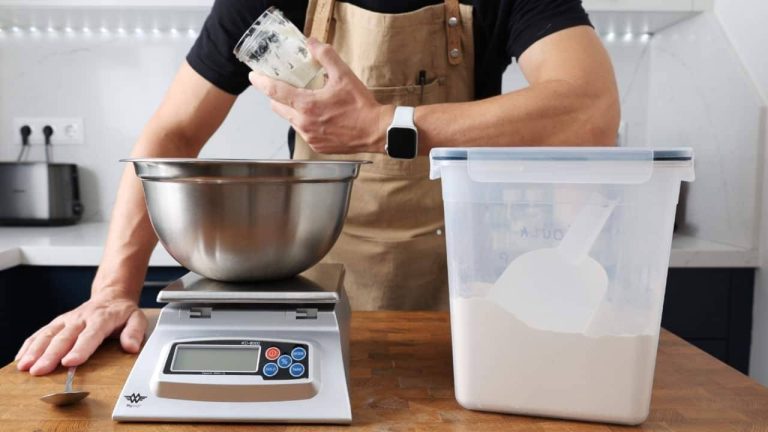
A kitchen scale is vital for precise measurements. We found that measuring cups don’t provide the accuracy needed for consistent results. Straight-sided vessels with lids are the best storage option during fermentation. These containers help you track dough growth and keep it from drying out.
Your cold fermentation toolkit should have the following:
- Kitchen scale for precise measurements
- Straight-sided containers with lids
- Bench scraper for dough handling
- Pizza peel for transfer
- Baking steel or stone for optimal heat distribution
Best Flour Types for Cold Fermentation
The flour you choose can make or break your cold fermented dough. It would be best to have 12-15% protein flour to build strong gluten structures that last through long fermentation periods.
These options give you the best results:
- Italian Tipo 00 Flour: Caputo Chef’s Flour (red bag) works great in home ovens
- High-Quality Bread Flour: Pick one with at least 12% protein content
Your flour should have a strength (‘W’) around 300W to get optimal cold fermentation results. This strength helps the dough maintain its structure during refrigeration for 72 hours.
Optimal Yeast and Salt Ratios
Cold fermentation needs less yeast than you might think. Here’s our tested ratio table for a simple cold fermented dough:
| Ingredient | Baker’s Percentage | Weight (for 480g flour) |
|---|---|---|
| Flour | 100% | 480g |
| Water | 62% | 298g |
| Salt | 2.9% | 14g |
| Instant Yeast | 0.21% | 1g |
Instant dry yeast mixes well with dry ingredients, making it our top choice. Fine sea salt dissolves easily and spreads evenly through the dough. The salt percentage (2.9%) adds flavor and helps control the fermentation rate while strengthening the gluten structure.
Clean, room-temperature water (around 20°C/68°F) gives you the best results. The water temperature rises slightly during mixing, reaching the perfect level for initial fermentation before refrigeration.
Step-by-Step Cold Fermentation Process
Now that we have our equipment and ingredients ready, let’s go through the steps of cold-fermenting pizza dough. This method givesimpressiveg results in our test kitchen.
Original Dough Preparation
Mix the dough ingredients and knead them for about 5 minutes until smooth. The dough needs a 20-minute rest to let the gluten relax naturally. This rest period is vital and helps build the right structure before moving forward.
The dough should be divided into equal portions and placed in lightly greased bowls, seam side down. A light coating of oil on top will keep the dough from drying during the first fermentation stage.
Temperature Control Methods
Most home pizza makers struggle with temperature management, but we’ve got a reliable solution. Here’s our tested temperature staging process:
| Stage | Temperature | Duration | Purpose |
|---|---|---|---|
| Initial Rest | Room temp (20-25°C) | 2 hours | Kickstart fermentation |
| Cooling Phase | Uncovered (4-7°C) | 2 hours | Uniform temperature drop |
| Cold Ferment | Covered (4-7°C) | 72 hours | Flavor development |
The uncovered cooling phase is our secret weapon. It cools the dough evenly and prevents uneven fermentation. After the cooling period, each dough ball is covered to prevent the surface from drying.
Monitoring Fermentation Progress
The cold fermentation process shows specific signs of proper development:
- Visual indicators:
- Slight increase in volume (30-50%)
- Tiny bubbles forming beneath the surface
- Surface becoming smoother
- Dough developing a more elastic texture
The dough needs 2 hours at room temperature after coming out of the refrigerator before shaping. This final rest makes a big difference – cold dough can tear and stretch unevenly.
Pro Tip: Keep the dough’s orientation consistent throughout the process. The top side in the bowl becomes your pizza crust’s top, while the bottom stays the bottom. This simple trick preserves the air pockets that develop during fermentation.
Cold fermentation blends art and science. These timelines serve as guidelines, but the dough’s signals guide our adjustments. The perfect pizza base develops slowly as the dough comes alive under controlled conditions.
Mastering Time and Temperature
Temperature and time are the foundations of creating exceptional cold-fermented pizza dough. Our testing has found the sweet spots that consistently deliver outstanding results.
Ideal Fermentation Duration Windows
Cold fermentation works best within specific time windows. You need at least 24 hours—anything less will not develop proper flavor. The optimal window goes up to 72 hours. During this time, the dough develops complex flavors and better structure.
Here’s what happens at different stages:
| Duration | Results |
|---|---|
| 24 hours | Good baseline development |
| 48 hours | Better flavor complexity |
| 72 hours | Peak flavor and texture |
| Beyond 72 hours | Potential over-fermentation |
Temperature Management Techniques
Consistent temperature control is vital for successful cold fermentation. The dough stays at 4-5°C (39.2-41°F), which perfectly balances slow yeast activity and enzymatic processes.
Critical Temperature Points:
- Original dough temperature: 18°C (64.4°F) minimum before shaping
- Refrigeration temperature: 4-5°C (39.2-41°F)
- Final rest temperature: Room temperature (20-25°C)
Signs of Proper Fermentation
Experience helps us spot when cold fermented pizza dough hits its sweet spot. Look for these signs in the dough:
- Physical characteristics:
- Slight increase in volume (30-50%)
- Smooth, elastic texture
- Small bubbles visible beneath the surface
- The pleasant, slightly sweet aroma
Stronger flour (around W300) handles longer fermentor extended periods without breaking down. With flour with a 12% protein content, stick to 24-48 hours of cold fermentation to get the best results.
Temperature control during the first cooling phase is significant. The dough needs to stay uncovered for two hours in the refrigerator. This helps it cool evenly and prevents condensation issues, resulting in uniform fermentation throughout the dough ball.
Watch for signs of over-fermentation, such as too much stickiness, fragility, or a solid sour smell. These indicate the process has gone too long. The 72-hour window gives consistently excellent results.
Note that watching your dough’s progress matters more than following strict time guidelines. Each kitchen environment differs slightly. Factors like flour strength and initial yeast quantity affect fermentation rates. Successful cold fermentation comes from understanding and adjusting to these variables.
Troubleshooting Common Issues
Making cold fermented pizza dough can be tricky, even with meticulous attention to detail. Here are solutions to the most common problems bakers face.
Identifying Under/Over Fermentation
Our years of experience have taught us reliable ways to detect fermentation issues. These are the signs we watch for:
| Fermentation State | Visual Signs | Texture Signs | Aroma Signs |
|---|---|---|---|
| Under-fermented | Few/no bubbles, flat surface | Dense, springs back quickly | Faint, lacking depth |
| Properly fermented | Small bubbles, slightly domed | Soft, elastic, slight indentation | Pleasant, yeasty |
| Over-fermented | Large bubbles, collapsed surface | Sticky, tears easily | Strong sour smell |
The dough that becomes too sticky or fragile usually indicates over-fermentation. We turn such dough into focaccia bread instead of pizza, and it works great.
Fixing Temperature Fluctuations
Temperature control is a vital part of successful cold fermentation. Here are practical solutions that work for common temperature issues:
- Refrigerator Temperature Management:
- Summer months: We maintain 36-37°F (2-3°C)
- Winter months: We adjust to 38-39°F (3-4°C)
- Monitor with a dedicated thermometer
The ideal final dough temperature after mixi should be between 65-70°F (18-21°Cg. Cold dough needs about an hour at room temperature before shaping.
Adjusting for Different Environments
Environmental factors substantially affect cold fermentation results. Bakers in warmer climates need to make several key adjustments:
Humidity Considerations: Humid environments need 2-3% less water to prevent sticky dough. Dry conditions might need slightly more hydration to balance moisture loss.
Seasonal Adjustments: Summer baking works better with:
- 10-15% less yeast
- Colder water in the mix
- Less bulk fermentation time before refrigeration
High-altitude baking needs 2-3% more hydration and slightly less yeast because fermentation happens faster at higher elevations.
Different flour types need different approaches. Stronger flours (W300+) can ferment longer, while weaker flours need shorter cold fermentation to avoid gluten breakdown.
Dough that doesn’t perform well usually points to flour protein content. Flour with at least 12% protein gives the best results. It stays strong during extended fermentation and develops complex flavors.
Note that over-fermented dough showing excessive stickiness or fragility needs to be discarded. Experience shows that broken-down gluten structure cannot be fixed.
Conclusion
Cold fermentation is a revolutionary technique for creating exceptional pizza dough. Our tests and research show that patience pays off. The slow development at cold temperatures produces complex flavors and a perfect texture that you can’t rush.
Quality ingredients, precise temperature control, and careful monitoring lead to success with cold-fermented dough. The perfect environment for flavor development requires consistent refrigeration between 4-5°C and adequate fermentation time (24-72 hours).
The science of cold fermentation might seem complex, yet our tested guidelines make the process simple. To achieve consistent, outstanding results, you’ll need a kitchen scale, proper containers, and high-protein flour.
Want to improve your pizza-making skills? The Yeast We Can Do offers an authentic artisanal sourdough starter that creates exceptional bread and pizza with perfect tangy flavor and signature crust. To get your premium starter, email john@theyeastwecando.com.
Note that exceptional pizza dough needs time, attention, and understanding. Become skilled at these cold fermentation techniques and watch for proper fermentation signs. Adjust your process based on your environment, and you’ll create pizza dough that rivals the world’s best pizzerias.