How to Master the Perfect Sourdough Cinnamon Roll Recipe
Did you know 87% of home bakers give up on sourdough recipes after their first failed attempt?
Creating the perfect sourdough cinnamon roll recipe feels like chasing a moving target. What should be pillowy-soft, aromatic rolls often turn dense, flat, or worse – they taste like yesterday’s bread.
The excellent news awaits: we’ve cracked the code to consistently excellent sourdough cinnamon rolls through countless test variations and our share of baking mishaps. Success depends on understanding the delicate dance between fermentation, temperature, and timing.
Your baking aspirations are within reach. This piece breaks down every significant step, from building a reliable starter to becoming skilled at that perfect spiral swirl. You’ll discover how to make overnight sourdough cinnamon rolls that practically prepare themselves or enhance your weekend baking adventures.
Are you ready to create bakery-worthy sourdough cinnamon rolls that will make your kitchen the most popular spot in the house? Let’s explore these delicious possibilities together!
Understanding Sourdough Fermentation
Let’s explore the fascinating world of sourdough fermentation—the magical process that transforms simple flour and water into the foundations of our perfect cinnamon rolls.
The Science Behind Wild Yeast
When we work with sourdough, nature’s chemistry lab comes to life. Our starter contains wild yeast and lactic acid bacteria (LAB) that work together in a remarkable partnership. Many people think yeast plays the starring role, but LAB outnumbers yeast cells by 100 to 1! These microscopic teammates break down carbohydrates in the flour and create the complex flavors that make our sourdough cinnamon rolls truly special.
How Fermentation Affects Texture
The fermentation process creates more than just flavor – it gives us the incredibly soft, pillowy texture we want in our cinnamon rolls. Our dough undergoes several fundamental changes during fermentation:
- Gluten structure becomes more extensible
- Proteins break down into amino acids
- Starch transforms into simple sugars
- Gas bubbles develop throughout the dough
- Moisture retention improves
These changes give us the characteristic tender crumb we want in our sourdough cinnamon rolls. The extended fermentation time allows the dough to develop, ultimately creating a structure that’s both strong enough to hold its shape and tender enough to pull apart beautifully.
Optimal Temperature and Time Variables
Temperature plays a vital role in controlling our fermentation. Here’s our proven approach to temperature management:
- Original Mix: Keep ingredients at 75-78°F (24-25°C)
- Bulk Fermentation: Maintain 78-82°F (25.5-28°C)
- Final Proof: Adjust based on the timeline
- Room temperature (3-4 hours)
- Refrigerated (8-12 hours for overnight sourdough cinnamon rolls)
In warmer conditions above 82°F (28°C), the dough becomes stickier and harder to handle. In these situations, we reduce the hydration slightly or use cold water to control the fermentation rate. Note that warmer temperatures speed up fermentation but can lead to over-proofed sourdough if we’re not careful.
Cold fermentation in the refrigerator helps with timing and develops deeper flavors for overnight sourdough cinnamon rolls. The fermentation continues even at cooler temperatures, just at a slower pace.
Creating Your Sourdough Starter
Creating a thriving sourdough starter resembles raising a pet – it needs regular attention, proper feeding, and the right environment to flourish. The perfect overnight sourdough cinnamon rolls require a well-established starter’s foundation.
Building a Strong Starter from Scratch
Based on your kitchen’s temperature, a resilient starter takes about 7-14 days to develop. This tried-and-tested process works well:
- Mix 100g whole grain rye flour with 125g filtered water (80°F)
- Cover loosely and maintain at 75-80°F
- After 24 hours, discard half and feed with equal parts flour and water
- Repeat daily until you see consistent activity
- Switch to all-purpose flour or bread flour for maintenance
Maintaining Starter Health
Once it shows signs of life, the starter needs regular feedings. A 1:1:1 ratio (starter:flour: water) works best for daily feedings at room temperature. Peak starter strength will give a better outcome for overnight sourdough cinnamon rolls. When baking less often, the starter can stay in the refrigerator with a weekly feeding. It needs 2-3 feedings at room temperature before using it in the cinnamon roll recipe.
Signs of Peak Fermentation
A healthy starter shows these active fermentation indicators:
- Doubles in size within 4-8 hours after feeding
- It shows many bubbles throughout, both large and small
- Develops a pleasant, fruity aroma
- Passes the float test (a spoonful floats in water)
- It has a spongy, marshmallow-like texture
Dark liquid on top (often called “hooch”) means your starter is hungry. Pour off the liquid and give it a fresh feeding. Temperature stability is vital—variations can cause sluggish fermentation and lead to over-proofed sourdough in the final bake.
Note that patience matters during this process. Commercial yeast might work faster, but natural sourdough starter creates complex flavors and enhances the texture of the finished cinnamon rolls.
Mastering the Perfect Dough
A great sourdough cinnamon roll recipe starts with the basics of dough making. Our years of testing and tweaking have shown that three essential elements lead to success: flour selection, water balance, and gluten development.
Ideal Flour Combinations
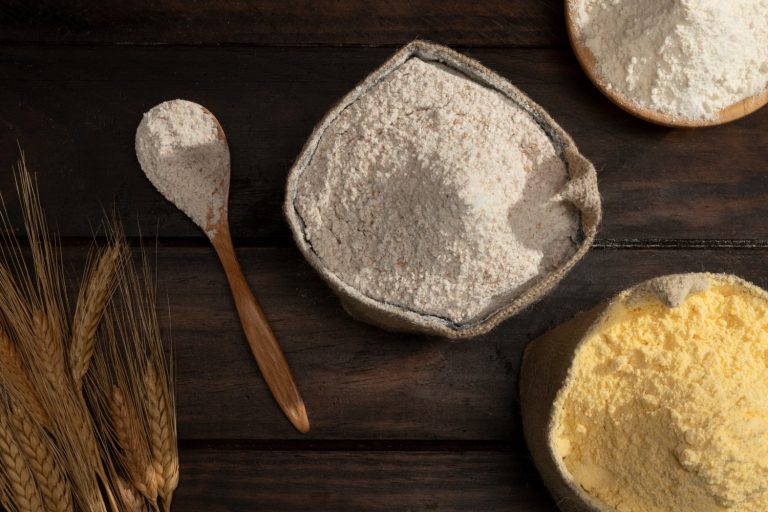
The secret to rolls with perfect texture lies in mutually beneficial flour combinations. Our preferred mix has:
| Flour Type | Protein Content | Purpose |
|---|---|---|
| Strong Bread Flour | 12-14% | Structure & Chew |
| All-Purpose Flour | 10-12% | Tenderness |
| Whole Wheat (optional) | 13-14% | Flavor depth |
Our overnight sourdough cinnamon rolls work best with 70% strong bread flour and 30% all-purpose flour. This mix creates an ideal balance between structure and tenderness. A small amount of whole wheat flour (up to 10%) can add flavor complexity without affecting the texture.
Proper Hydration Levels
Hydration is a vital factor in achieving that perfect, pillowy texture. Our sourdough cinnamon rolls need a 65-70% hydration level that provides:
- Enough moisture for proper fermentation
- Good gluten development
- Easy dough handling
- Perfect final texture
- Proper shelf life
Summer baking requires lower hydration, at 65%, to avoid sticky dough. Winter baking works better with 70% hydration to offset drier conditions. Your starter’s hydration will affect the final dough consistency.
Developing Gluten Structure
Strong gluten development creates those perfect spiral layers in sourdough cinnamon rolls. Our technique combines several steps:
Mix ingredients until just combined, and let the dough rest for 30 minutes. This autolyze period helps the flour hydrate fully. Then, perform 3-4 stretches and folds at 30-minute intervals.
The dough should pass the windowpane test—it should stretch thin enough to see light through without tearing. After the final fold, the dough undergoes overnight fermentation in the refrigerator at 40°F (4°C). This slow, controlled process develops complex flavors.
Temperature control makes a big difference. A room between 68-72°F (20-22°C) gives consistent results. Cooler water helps prevent over-proofed sourdough in warmer kitchens.
Advanced Rolling Techniques
Rolling the perfect sourdough cinnamon roll combines precision with intuition. After becoming skilled at dough preparation, you can create beautifully spiraled rolls that would make any baker proud.
Creating Even Spiral Layers
Picture-perfect spirals start with the original rectangle formation. Roll your dough into a precise 14″ x 16″ rectangle with even thickness throughout. Here’s the quickest way to roll:
- Lightly oil and flour the work surface to prevent sticking
- Pat dough into a rough rectangle and let it rest for 5 minutes
- Roll from the center outward with consistent pressure
- Measure with a ruler for accuracy
- Stretch corners gently to achieve perfect angles
The “stretch and roll” technique creates signature tight spiral structures. Gently pull the dough away from yourself, then roll it toward you to define exceptional sourdough cinnamon rolls.
Achieving Perfect Tension
Tension development is a vital part of maintaining beautiful spiral layers during baking. The process starts before the actual rolling begins. These techniques help build proper tension:
- Use a bench scraper as your hand’s extension
- Push away while rotating the dough to create surface tension
- Avoid overworking the gluten membrane
- Watch for the dough’s “resistance point.”
- Stop rolling once the dough begins to fight back
Preventing Filling Leakage
Filling that leaks during baking can ruin a beautiful sourdough cinnamon roll. Our method keeps that gooey goodness in place. Instant clear jel added to the filling mixture changes everything.
This modified cornstarch works before heat application and keeps the filling in place during proofing and baking. Mix it with brown sugar and cinnamon to create a spreadable mixture that stays put.
The optimal filling consistency needs this ratio:
| Ingredient | Proportion |
|---|---|
| Brown Sugar | Three parts |
| Clear Jel | 1 part |
| Cinnamon | 1 part |
Temperature control helps prevent leakage. Refrigerate rolled logs for 20 minutes before cutting to firm up the filling. A sharp, serrated knife or dental floss creates the cleanest cuts without squishing those perfect spirals.
Professional Finishing Methods
Professional finishing touches will turn good sourdough cinnamon rolls into extraordinary ones. The dough is perfect, and those tight spirals look great. Let’s improve these rolls with expert finishing techniques that make them stand out.
Temperature-Controlled Proofing
Many bakers struggle with proofing and end up with over-proofed sourdough that loses its structure. Here’s our tested proofing matrix with three reliable options:
| Proofing Method | Temperature | Duration | Result |
|---|---|---|---|
| Room Temperature | 75°F-78°F | 2-3 hours | Fluffier texture |
| Combined Method | 75°F + 40°F | 2 hrs room + overnight | Improved flavor |
| Cold Proof | 40°F | 8-48 hours | Complex taste |
A compact proofing chamber helps maintain a consistent temperature, creating a stable environment that can be replicated every time. The dough’s internal temperature is a vital indicator—75°F signals it’s ready for the next step.
Strategic Scoring Patterns
The cuts we make determine our rolls’ final look and texture. These two professional methods work best:
The Dental Floss Technique
- Creates clean cuts without compression
- Maintains spiral structure
- Works best with chilled dough
The Sharp Serrated Knife Method
- Quick, diagonal slicing motion
- Minimal downward pressure
- Perfect for room-temperature dough
Marking the dough at 1.5-inch intervals before cutting will give uniform size and even baking. The dental floss method works great with chilled dough for overnight sourdough cinnamon rolls.
Glazing and Presentation Tips
Our two-stage glazing process will give perfect coverage and keep moisture locked in:
Stage 1 – Hot Glaze Application:
- Pour half the glaze right after baking
- Temperature should be 190°F internal
- Let glaze soak in for 30 minutes
Stage 2 – Final Coating:
- Add remaining glaze after cooling
- Spread evenly with an offset spatula
- Creates that professional bakery finish
Cooled rolls stay fresh for up to a week in the refrigerator. Heat them in a 325°F oven under foil to prevent over-browning.
A well-seasoned cast iron skillet,t, or ceramic baker makes these rolls look fantastic. Cast iron’s dark surface helps even browning, while ceramic spreads heat gently. Small gaps between rolls let them expand naturally during the final proof, creating that perfect pull-apart texture.
A digital thermometer helps control the temperature precisely throughout the process. The dough should stay below 78°F during proofing. Higher temperatures can ruin the delicate structure we’ve built.
To lift these rolls to new heights, toasted pecans or a light dusting of cinnamon sugar just before serving. These final touches add great texture contrasts, making our sourdough cinnamon rolls unforgettable.
Conclusion
Becoming skilled at sourdough cinnamon rolls takes patience, precision, and knowledge of significant elements—these range from wild yeast behavior to professional finishing touches. Understanding proper fermentation control, starter maintenance, and dough development will show why these rolls differ from regular yeast versions.
The path to success requires respect for each step. It would be best to have optimal temperatures, perfect dough hydration, and confident spiral-creating techniques. Small details make a difference—dental floss creates clean cuts, and our signature two-stage glazing process adds the final touch.
You can begin your sourdough trip with confidence. The Yeast We Can Do offers an authentic artisanal sourdough starter to improve your bread and pizza-making skills. This premium starter helps create exceptional bread and pizza with perfect tangy flavor and signature crust. Contact john@theyeastwecando.com to get yours today.
Note that practice and attention to detail produce great sourdough cinnamon rolls. Each batch teaches something new and builds your expertise and intuition. These techniques and tips will help you create bakery-worthy rolls that make your kitchen the neighborhood’s favorite breakfast destination.
FAQs
Currently, no frequently asked questions are available about mastering the perfect sourdough cinnamon roll recipe. Please check back later for updates.