How to Price Sourdough Bread: A Profit Margin Guide
Many home bakers and small-scale producers face their most significant challenge when pricing their sourdough bread. The long fermentation process and artisanal qualities of sourdough bread make pricing decisions complex. Bakers must balance production costs with market expectations and maintain healthy profit margins.
This detailed piece discusses everything that determines sourdough bread pricing. You’ll discover how to calculate ingredient costs and account for labor time. The guide also shows you ways to handle overhead expenses and set the right profit margins. Bakers will find practical tools to establish competitive prices that match their efforts and current market conditions.
Calculate Your Ingredient Costs
Precise ingredient cost calculations are the foundations of profitable sourdough bread pricing. A systematic cost-tracking and calculation approach will give consistent pricing and green operations.
List all ingredients and quantities.
A simple sourdough recipe needs just a few ingredients: organic flour, sea salt, water, and starter culture. You can make a standard loaf with these quantities:
| Ingredient | Typical Quantity |
|---|---|
| Bread Flour | 500g base + 100g for starter |
| Sea Salt | 2% of flour weight |
| Water | 66% hydration ratio |
| Starter Culture | Original cost: ~$13 |
Research current prices
Market prices for essential ingredients change significantly depending on quality and source. Premium organic bread flour costs between $6.59 and $9.00 for a 5-pound bag. Specialty flours cost more:
- Whole wheat flour: approximately $1.79 per pound
- Dark rye flour: around $3.35 for 24 ounces
Bulk purchases help reduce costs, but good storage is essential to keeping everything fresh. Many bakers use all-purpose flour with added vital wheat gluten as an economical alternative to premium bread flour.
Calculate the total ingredient cost per loaf.
Here’s how to figure out the exact cost for each loaf:
- Convert all ingredients to consistent units (pounds or ounces)
- Multiply each ingredient weight by its cost per unit
- Sum all ingredient costs for the total batch cost
- Divide the total cost by the number of loaves produced
Based on flour quality, a simple sourdough loaf’s ingredient costs between $1.00 and $2.00. These current prices tell the story:
- Bread flour (600g): $1.20
- Salt (12g): $0.09
- Water: negligible cost
- Starter maintenance (weekly): $4.51
Quality organic ingredients bring the total cost to about $1.55 per loaf. This calculation helps determine the final retail price, which needs to factor in labor and overhead costs.
Adding specialty ingredients can significantly increase the base cost. For instance, 150g of vintage cheddar adds about $2.00 to a single loaf’s ingredient cost.
Factor in Labor and Time
Labor costs are a significant factor in determining the true value of artisanal sourdough bread. Accurate tracking and pricing of time investment will allow bakers at any scale to maintain viable pricing strategies.
Track time spent on each step
Time tracking should focus on active work periods and exclude passive fermentation and proofing times. Bakers need to monitor these key production phases:
| Production Step | Time (mins) |
|---|---|
| Weighing/Mixing | 7 |
| Stretch and Fold | 1 |
| Dividing | 4 |
| Shaping | 3 |
| Baking | 3 |
| Cleaning | 2 |
Bakers should use a timer and record times from multiple batches to establish consistent averages. Larger batch sizes improve time efficiency significantly—a single loaf might need 90 minutes of active work, while a batch of 24 loaves needs only 20 minutes of total labor.
Determine your hourly rate.
Your ideal hourly rate varies based on these critical factors:
- What skilled bakers earn in your area
- Your skill level and expertise
- How much you can produce and how quickly
- Your business’s overhead costs
Entry-level baking jobs typically pay $12.00 per hour. However, skilled artisan bakers should aim for rates starting at $18.00 per hour or higher. These higher rates reflect your specialized sourdough knowledge and the crafty nature of your products.
Calculate labor cost per loaf.
Here’s how you can figure out the labor cost for each loaf:
- Calculate the minute rate: Divide the hourly rate by 60
- Multiply the minute rate by the total active production time
- Divide total labor cost by batch size
Let’s look at an example with an $18.00 hourly rate ($0.30 per minute) and 20-minute production time for 24 loaves:
- Total labor cost: $0.30 × 20 = $6.00
- Cost per loaf: $6.00 ÷ 24 = $0.25
Labor costs are hit harder with smaller quantities. A four-loaf batch needs two hours of active work and leads to much higher costs per loaf:
- Total labor cost: $18.00 × 2 = $36.00
- Cost per loaf: $36.00 ÷ 4 = $9.00
Many small-scale bakers treat their labor as an investment instead of a direct cost while building their customer base. As production volume grows, the business becomes more financially viable because the labor cost per unit drops substantially.
Account for Overhead Expenses
Overhead expenses substantially affect sourdough bread’s final pricing. Many home bakers overlook these hidden costs. A clear understanding and calculation of these expenses will give accurate pricing and environmentally responsible business operations.
Utilities (electricity, water)
Baking equipment’s energy consumption adds significant overhead costs to your operation. A typical home oven uses 3-5 KWh of power. Here’s what average baking sessions cost:
| Utility Component | Cost Range |
|---|---|
| Preheating (30 mins) | $0.20-0.30 |
| Baking (45 mins) | $0.34-0.45 |
| Cooling Period | $0.10-0.15 |
Water costs stay minimal in sourdough production and rarely exceed $0.01 per loaf. Your utility costs might increase during summer because you need extra cooling. These simple steps can help optimize your utility expenses:
- Batch multiple loaves together
- Use cold-start methods when possible
- Schedule baking during off-peak hours
- Maintain equipment efficiency
Equipment depreciation
Your bakery equipment loses value gradually as time passes. The straight-line depreciation method provides the simplest way to calculate this value loss in sourdough production:
Annual Depreciation = (Asset Cost – Salvage Value) / Useful Life
A professional mixer’s depreciation calculation serves as a good example:
- Purchase cost: $1,000
- Estimated helpful life: 5 years
- Salvage value: $100
- Annual depreciation: ($1,000 – $100) / 5 = $180
Your bakery’s major equipment needs regular depreciation tracking. Here’s what to monitor:
- Ovens that typically last 15 years
- Mixers with 5-10-year lifespans
- Proofing cabinets
- Cooling racks
- Storage containers
Packaging materials
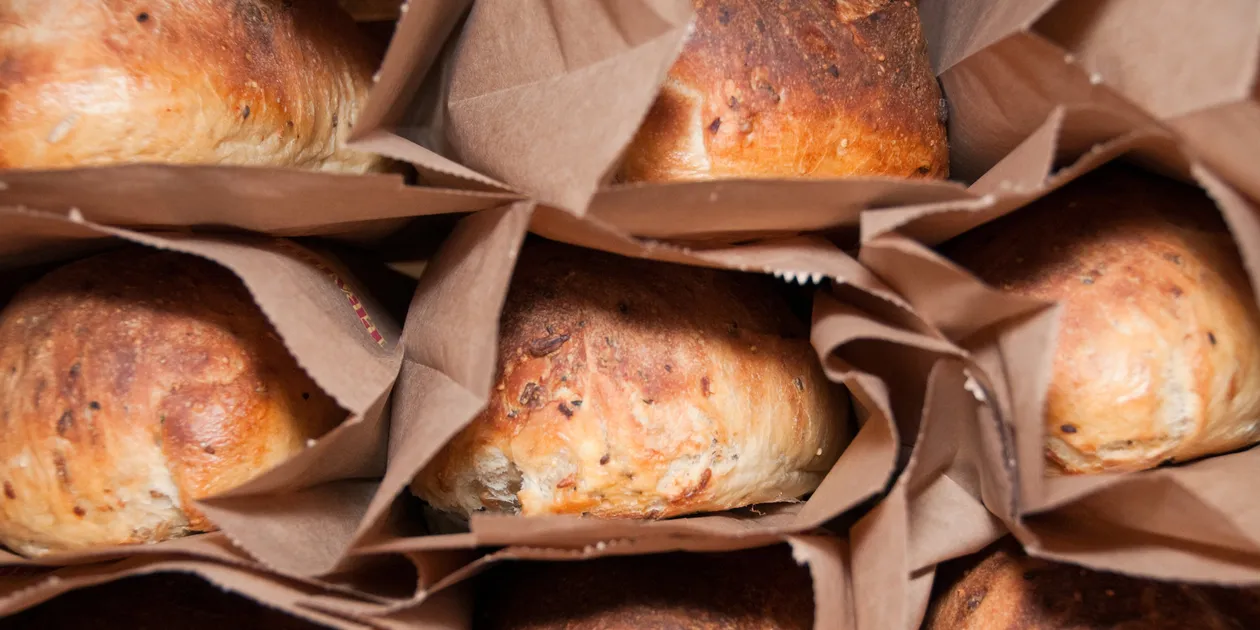
Quality packaging safeguards products and elevates brand presentation. Standard packaging options include:
| Material Type | Cost per Unit | Minimum Order |
|---|---|---|
| Kraft Paper Bags | $0.30-0.45 | 50-100 units |
| Clear Window Bags | $0.45-0.60 | 30-50 units |
| Premium Branded Bags | $0.75-1.00 | 100+ units |
The selection of packaging materials needs careful evaluation of food-grade certification and moisture resistance. Brand presentation and storage requirements matter significantly. Biodegradable options deserve attention in today’s market.
Small-batch producers spend $0.45-$0.75 per loaf on packaging that includes labels and closure materials. Bulk purchasing can reduce per-unit costs, though it requires adequate storage space and proper inventory management.
The total overhead cost calculation per loaf follows these steps:
- Sum monthly utility expenses
- Add monthly depreciation amounts
- Include packaging costs
- Divide by monthly production volume
A home baker’s monthly production of 100 loaves illustrates these overhead costs:
- Utilities: $45 ($0.45/loaf)
- Depreciation: $30 ($0.30/loaf)
- Packaging: $50 ($0.50/loaf)
Total overhead per loaf: $1.25
Set Your Profit Margin
The right profit margin can turn a bread-making hobby into a successful business. Ingredient costs and labor are the foundations of pricing, and intelligent profit margins help ensure success in the competitive artisanal bread market.
Determine your desired profit percentage.
Small artisanal bakeries want to maintain profit margins between 5% and 15%. Larger operations can achieve 10% to 20% through economies of scale. Sourdough bread makers should consider implementing a profit index system that helps track profitability.
A recommended starting Profit Index of 1.7 works well for most bakeries. This index adds a 70% margin to the cost price and creates a buffer against unexpected expenses. Bakers can also adjust this margin based on seasonal changes.
The profit index calculation uses this simple formula:
Selling Price = Cost Price × Profit Index
A practical example shows how this works. A loaf that costs $2.06 to produce:
$2.06 × 1.7 = $3.50 (final selling price)
Calculate your selling price with profit.
The final selling price combines these costs:
- Base ingredient cost ($1.55)
- Labor cost (which changes with batch size)
- Overhead expenses ($1.25)
- Profit margin (70% using 1.7 index)
| Production Scale | Cost Structure | Selling Price |
|---|---|---|
| Small Batch (4 loaves) | Higher per-unit cost | $6.00-8.00 |
| Medium Batch (24 loaves) | Moderate efficiency | $4.50-6.00 |
| Large Batch (100+ loaves) | Maximum efficiency | $4.00-5.00 |
Bakers should keep their profit indices consistent for all products to keep their business sustainable. The pricing might need adjustments based on the following:
- What customers need
- Changes in ingredient costs by season
- Local competition
- How many loaves you make
Compare to market prices.
Market research shows notable price variations in artisanal sourdough:
- Supermarket artisanal bread: $4.00-5.00
- Local bakeries: $4.20-8.00
- Premium artisanal markets: $6.00-12.00
Your pricing strategy should account for these critical factors:
Market Position Factors:
- Your local area’s purchasing power
- Competition in your area
- What makes your product unique
- Your brand’s visibility
New bakers can try these pricing strategies:
- Match your local bakery’s prices
- Start with special introduction rates
- Set premium prices for specialty varieties
- Give regular customers bulk discounts
The best way to price your bread starts by looking at market rates. Local artisanal loaves selling for $6.00 mean you should check if your production costs let you compete profitably. A simple business model suggests ingredient costs shouldn’t exceed one-third of your retail price.
Price Optimization Strategies:
- Listen to what customers say
- Watch how different prices affect sales
- Make batch sizes more efficient
- Adjust prices with seasons
Small bakeries succeed by:
- Making unique varieties their focus
- Creating strong customer bonds
- Setting up bread subscriptions
- Creating signature flavors
Quality matters more than the price of artisanal products. Your well-crafted sourdough can command higher prices if it maintains quality and character. Research shows artisanal bread buyers care most about:
- Traditional baking methods
- Premium ingredients
- Reliable quality
- Real sourdough taste
Home bakers moving into commercial sales should focus on quality and consistency before profits. Your margins can grow as you get better at:
- Buying ingredients in bulk
- Managing time better
- Making production more efficient
- Building a more robust market presence
Conclusion
Setting the right price for sourdough bread requires considering several factors, ranging from simple ingredient costs to complex overhead calculations. Small-scale bakers create sustainable business models when they track expenses systematically and account for labor time. These fundamental elements and smart profit margins help bakers set prices that reflect their efforts and market realities while keeping their competitive edge.
Quality ingredients and proven techniques are the lifeblood of profitable artisanal bread production. Market research shows customers value authentic sourdough characteristics and willingly pay premium prices for exceptional products. Bakers who want to become skilled at their craft can lift their bread and pizza game with an authentic artisanal sourdough starter from The Yeast We Can Do email john@theyeastwecando.com. Intelligent pricing strategies and product excellence build a strong foundation for lasting success in the artisanal bread market.
FAQs
What is considered a good profit margin for selling bread?
A healthy net profit margin target in the bakery industry is around 20%. An average bakery operates at about 10% net profit margin. This margin should cover all expenses, not just the cost of goods sold (COGS).
What price range is typical for homemade sourdough bread?
Homemade sourdough bread can typically be sold for between USD 10.00 and USD 12.00 per loaf. Prices can vary based on the market and competition, as seen in farmers’ markets where similar pricing among sellers is every day.
What are the costs involved in making a loaf of sourdough bread?
The essential cost of ingredients for a loaf of sourdough bread ranges from USD 1.00 to USD 2.00. When including time, labor, and energy costs, the total cost per loaf can increase to USD 5.00 and USD 20.00.
Why is sourdough bread considered valuable?
Sourdough bread is valued for its nutritional benefits. Compared to other breads, it contains higher levels of vitamins, minerals, and antioxidants. Additionally, it has lower levels of phytate, which enhances the body’s ability to absorb these nutrients more effectively.