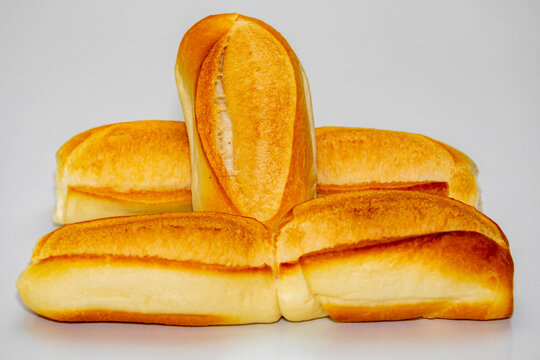
Sourdough Pão Francês: A Brazilian Breakfast Classic with a Twist Recipe
Transform the beloved Brazilian breakfast staple into an artisanal creation by incorporating sourdough fermentation. This fusion recipe combines the characteristic crispy crust and light, airy crumb of traditional Pão Francês with sourdough bread’s complex flavor profile and digestive benefits.
Time Requirements
- Active Starter Feeding: 4-6 hours
- Dough Preparation: 30 minutes
- First Fermentation: 4-6 hours
- Second Fermentation: 12-14 hours (overnight)
- Shaping: 20 minutes
- Final Proof: 1-2 hours
- Baking: 20-25 minutes
- Total Time: 22-29 hours (mostly inactive)
Yield
- 12 rolls (approximately 60g each)
Ingredients
For the Levain
- 50g mature sourdough starter (100% hydration)
- 100g bread flour
- 100g filtered water at room temperature
For the Final Dough
- All of the levain (250g)
- 500g bread flour
- 300g filtered water
- 10g salt
- 15g sugar
- 20g unsalted butter, softened
Instructions
Day 1: Morning
- Prepare the Levain
- Mix mature starter, flour, and water in a clean container
- Cover loosely and let ferment for 4-6 hours until doubled and bubbly
Day 1: Evening
Mix the Final Dough
- In a large bowl, combine levain with water and mix until homogeneous
- Add flour, salt, and sugar; mix until no dry flour remains
- Knead for 5 minutes
- Add softened butter and knead for another 8-10 minutes until smooth
- Perform three sets of stretches and folds at 30-minute intervals
First Fermentation
- Cover and let ferment at room temperature (22-25°C/72-77°F) for 4-6 hours
- Transfer to the refrigerator overnight
Day 2: Morning
Shape the Rolls
- Remove dough from refrigerator
- Divide into 12 equal portions (approximately 60g each)
- Shape each portion into a tight ball
- Roll each ball into an oval shape
- Create the characteristic “canoe” shape by pressing lengthwise with a dowel.
Final Proof
- Place shaped rolls on parchment-lined baking sheets
- Cover loosely with plastic wrap
- Let proof for 1-2 hours until slightly puffy
Baking
- Preheat oven to 230°C (450°F) with a baking stone if available
- Steam the oven by placing a tray of hot water on the bottom rack
- Score each roll lengthwise with a sharp blade
- Bake for 20-25 minutes until golden brown and crusty
Storage Tips
- Best consumed fresh on the day of baking
- Store in a paper bag at room temperature for up to 2 days
- Freeze for up to 3 months in an airtight container
- Refresh frozen rolls in a 180°C (350°F) oven for 5-7 minutes
Nutrition Facts (per roll)
- Calories: 165
- Protein: 5g
- Carbohydrates: 31g
- Fiber: 1.2g
- Fat: 2.5g
- Sodium: 195mg
Recipe Variations
Whole Wheat Version
- Replace 30% of bread flour with whole wheat flour
- Increase water by 20g to maintain hydration
Multigrain
- Add 50g mixed seeds (sunflower, pumpkin, flax)
- Soak seeds in 50g hot water before incorporating
Enriched Version
- Aoned 1 egg to the dough
- Increase butter to 30g for a richer crumb
Process Tips
- Maintain dough temperature between 24-26°C (75-79°F) during fermentation
- Use a spray bottle to mist rolls before baking for optimal crust development
- The characteristic “split” on top should open during baking
- Look for a hollow sound when tapping the bottom to ensure doneness
Pairing Suggestions
- Serve with requeijão (Brazilian cream cheese)
- Perfect with café com leite (Brazilian coffee with hot milk)
- Excellent for ham and cheese sandwiches
- Ideal for dunking in soup or stew
Common Substitutions
- Replace bread flour with all-purpose flour (reduce water by 20g)
- Use instant yeast (2g) + poolish for a quicker version
- Substitute butter with olive oil or vegetable oil
- Use honey or maple syrup instead of sugar
FAQ
Why didn’t my rolls develop the characteristic split on top?
- This usually occurs when the scoring isn’t deep enough, or the oven temperature isn’t high enough. Ensure proper steam and temperature at the start of baking.
Can I make these without a sourdough starter?
- Yes, but you’ll need to create a poolish with commercial yeast the night before. Use 2g instant yeast, 100g flour, and 100g water.
Why are my rolls dense instead of light and airy?
- This could be due to insufficient fermentation or improper shaping. Ensure your starter is active and that you’re creating enough surface tension when shaping.
Fun Food Fact
Pão Francês translates to “French Bread,” a Brazilian invention from the early 1900s when French baking techniques were considered prestigious; despite its name, you won’t find this exact style of bread in France! The unique shaping technique using a dowel or ruler (called “pestana” or “eyelash” in Portuguese) is distinctly Brazilian.