How to Make Low Carb Sourdough: A Complete Recipe Guide
Missing that crusty, tangy sourdough taste on your low-carb diet? You’re not alone.
A single slice of sourdough contains 32 grams of carbs, which exceeds most low-carb daily limits. Here’s the good news – you can create a delicious low-carb sourdough that’s simpler than you’d expect.
Success comes from blending specific low-carb flours with time-tested sourdough fermentation methods. The natural fermentation reduces carb content while you retain that classic sourdough flavor everyone loves.
Want to bake a loaf that matches your low-carb lifestyle without losing taste? We’ll guide you from starter creation to achieving the perfect crust. Time to start baking!
Understanding Low Carb Sourdough Basics
Let’s take a closer look at why traditional sourdough has high carbs and how we can change it into a low-carb alternative. A regular slice of sourdough bread has about 16.1g total carbs and 15.4g net carbs. This makes it tough for people who want to stick to a low-carb diet.
What Makes Traditional Sourdough High in Carbs
Wheat flour is the main ingredient in traditional sourdough, and it naturally packs a lot of carbohydrates. The fermentation process helps reduce some carbs, and a standard sourdough slice still contains about 13.7g of starch. We found that there was something interesting – the flour type and bread’s density affect the bread’s glycemic effect more than how it rises.
Benefits of Low Carb Sourdough Fermentation
The way fermentation changes our low-carb sourdough really gets us excited. Wild yeast and lactic acid bacteria break down carbohydrates when the dough ferments. This makes the bread easier to digest and more nutritious. Your body absorbs sugars more slowly into the bloodstream because of this process.
Our bread becomes more nutritious through fermentation by:
- Making minerals easier for your body to use
- Lowering anti-nutrients
- Supporting gut health with probiotic properties
- Creating a lower glycemic index than regular bread
Essential Low Carb Flour Alternatives
The quickest way to make great low-carb sourdough is picking the right flour substitutes. Almond flour works great with only 3g total carbs per 2-tablespoon serving. Coconut flour gives excellent structure even with its low carb content. You’ll get the best results by mixing these flours with psyllium husk powder. This combination creates that real bread texture while keeping net carbs low.
Creating Your Low Carb Sourdough Starter
A thriving low-carb sourdough starter needs careful attention to flour selection and maintenance. Our largest longitudinal study helped us develop a reliable method that maintains the authentic sourdough experience while keeping carbs in check.
Choosing the Right Flour Combination
Tests show that coconut flour performs better than almond flour for starters because it contains nowhere near the oil content – less than 20% compared to almond flour’s 50%. The combination of coconut flour with lupin flour has shown impressive results in starter health over extended periods.
Step-by-Step Starter Creation Process
This proven process will help you create your low-carb starter:
Gather your tools:
- Digital kitchen scale
- 1-quart mason jar
- Distilled or de-chlorinated water
- Your chosen low-carb flour mix
Begin the cultivation:
- Mix 75g of your flour combination with 200g water
- Keep at room temperature (around 70°F)
- Feed every 24 hours for 7-10 days
Maintaining a Healthy Low Carb Starter
Your starter’s maintenance is a vital part of long-term success. Regular feeding schedules matter even with low-carb variations. These steps deliver optimal results:
- Feed daily if kept at room temperature
- Store in refrigerator for weekly feeding schedule
- Maintain consistent ratios of 1:1:1 (starter:flour:water)
- Watch for signs of fermentation – bubbles and a mild sour aroma
Note that low-carb starters might not show the same vigorous activity as traditional wheat-based ones, but they can still produce excellent results. Your starter seems sluggish? Try increasing the room temperature slightly or adjusting the feeding ratio.
Master Low Carb Sourdough Recipe
After getting comfortable with our starter, let’s take a closer look at making the perfect low-carb sourdough bread. We tested many combinations to create a recipe that gives you that authentic sourdough experience without the carb overload.
Required Ingredients and Equipment
To make our low-carb sourdough bread, you’ll need:
- 1½ cups almond flour
- ½ cup coconut flour
- ⅓ cup psyllium husk powder (whole husks, not pre-powdered)
- ½ cup flax meal
- ¾ cup egg whites (about 6 large eggs)
- ¾ cup buttermilk
- ½ cup sauerkraut juice or apple cider vinegar
Mixing and Fermentation Process
Start by combining the dry ingredients in a large bowl. Proper hydration of the psyllium husk will give a perfect chewy texture. Mix the wet ingredients separately, then gradually add them to the dry mixture.
Baking Techniques for Perfect Crust
These techniques will help you achieve that perfect crust:
- Preheat your oven to 350°F (175°C)
- Line your baking sheet with parchment paper
- Score the top of your loaf before baking
- Bake for 30-35 minutes until golden brown
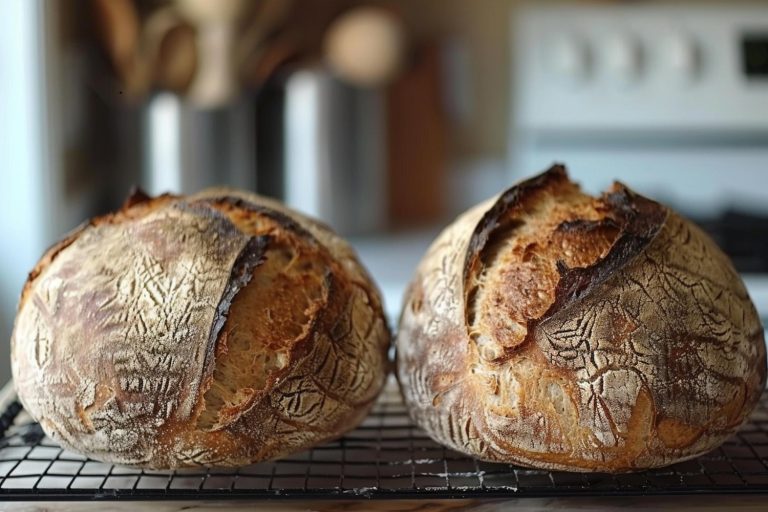
We found that brushing the tops with melted butter and finishing under the broiler for 2-3 minutes creates that signature golden-brown, crispy crust. The bread should cool completely before slicing – this patience rewards you with the perfect texture and prevents the crumb from becoming gummy.
This recipe creates bread that’s not just low in carbs but versatile enough for sandwiches, toast, or simply enjoying with butter. The mix of three different leavening agents – egg whites, baking powder, and baking soda – will give proper rise and prevents collapse under the weight of our alternative flours.
Troubleshooting Common Issues
Your low-carb sourdough experience might present some challenges, even with our detailed recipe. Here are solutions to common problems we’ve faced.
Dealing with Dense or Heavy Bread
Dense or heavy low-carb sourdough usually points to under-fermentation or a weak starter. Bakers often cut the bulk fermentation time too short. The solution is simple – extend your bulk fermentation time and make sure your starter is mature. A starter needs at least 14 days to become viable.
Fixing Starter Problems
Starter issues often show up as unusual smells or lack of activity. Your starter might smell like alcohol or acetone – this is normal and shows your bacteria need more oxygen. A sluggish starter can be revived with these solutions:
- Keep temperature between 70-85°F to optimize activity
- Feed twice daily to boost activity
- Use filtered water to avoid chlorine interference
Adjusting for Different Climates
Climate substantially affects sourdough behavior, especially in humid conditions. Humidity between 60-80% works best for fermentation. When humidity is high:
- Cut hydration by 2-5% to curb increased moisture absorption
- Use less starter to slow fermentation
- Watch dough temperature closely – cool it briefly in the refrigerator if it goes above 86°F
A kitchen thermometer helps track both ambient and dough temperatures for the best results in any climate. High temperatures speed up fermentation – an 8-hour process might take only 3-4 hours at 85°F.
Sticky dough in humid conditions can be fixed by reducing water content by 10g at a time during stretch and folds. This small change makes a big difference in handling while keeping the perfect texture we want in our low-carb sourdough.
Conclusion
Creating delicious low-carb sourdough bread takes patience, practice, and understanding of core principles. Our hands-on experience with alternative flours, fermentation techniques, and proper starter maintenance proves that healthy sourdough fits seamlessly into a low-carb lifestyle.
The perfect loaf demands attention to detail. You need the right flour combinations, optimal temperatures, and adequate fermentation time. These elements blend together to deliver that perfect crusty exterior and chewy interior we all love in sourdough, while keeping carbs low.
Each kitchen brings its own unique challenges, but our troubleshooting guide helps you tackle common issues effectively. Solutions exist for every sourdough challenge – from humidity changes to starter problems. Want to dive deeper into sourdough skills? Our website theyeastwecando.com has everything you need.
These techniques and tips will help you create incredible low-carb sourdough bread that matches traditional versions. Your perfect loaf is just a few steps away – time to get baking!
FAQs
Q1. Is sourdough bread low in carbs? While sourdough bread is generally lower in carbs than regular bread due to the fermentation process, it’s not considered a low-carb food. However, the fermentation does break down some of the starches, making it more digestible and potentially better for blood sugar control than regular bread.
Q2. How can I make a low-carb version of sourdough bread? To make a low-carb sourdough bread, use alternative flours like almond flour, coconut flour, and psyllium husk powder instead of wheat flour. Combine these with a low-carb sourdough starter and follow a similar fermentation process to traditional sourdough. The result won’t be exactly like wheat-based sourdough, but it can satisfy bread cravings on a low-carb diet.
Q3. What are the benefits of low-carb sourdough fermentation? Low-carb sourdough fermentation offers several benefits, including improved digestibility, increased bioavailability of minerals, and a lower glycemic index compared to regular bread. The fermentation process also creates beneficial bacteria that can support gut health.
Q4. How do I create and maintain a low-carb sourdough starter? To create a low-carb sourdough starter, combine low-carb flours like coconut flour with water and allow it to ferment. Feed the starter regularly with a mixture of low-carb flours and water, maintaining a consistent feeding schedule. Keep it at room temperature if feeding daily, or refrigerate for weekly feeding.
Q5. What are common issues when making low-carb sourdough and how can I fix them? Common issues include dense bread, sluggish starters, and adjusting to different climates. To address these, ensure proper fermentation time, maintain optimal temperatures for your starter (70-85°F), and adjust hydration levels based on humidity. If your bread is too dense, try extending the bulk fermentation time or ensuring your starter is fully mature befo